

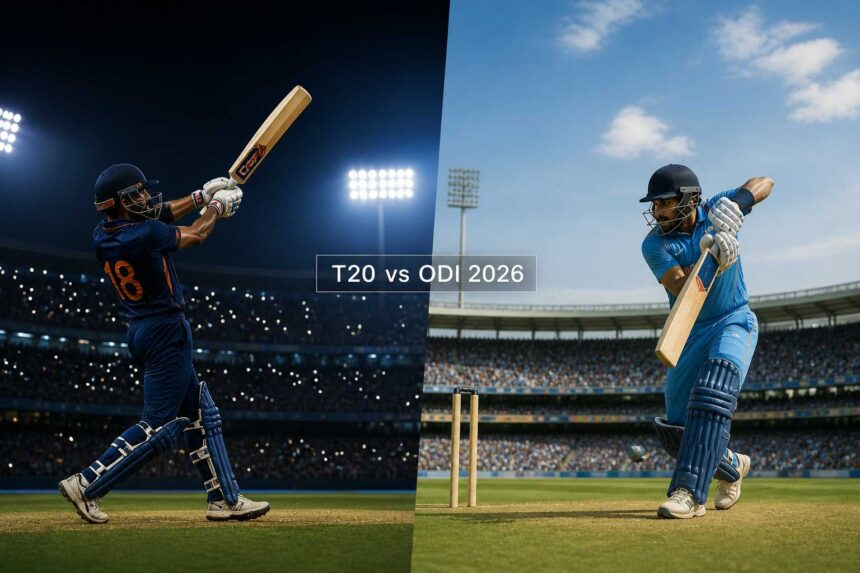

T20 now captures nearly 70% of global cricket viewership—but does that mean ODI cricket is fading away? In 2026, the ODI vs T20 popularity debate is no longer opinion—it’s backed by real data, viewership trends, and revenue shifts.
For a deeper comparison, see our detailed breakdown of IPL vs PSL comparison 2026
The shift in cricket popularity is driven by how fans consume the game today—and which format captures the most attention.
In fact, recent trends clearly show a major shift in audience behavior, driven by shorter formats, digital platforms, and year-round league engagement.
Quick Answer (Featured Snippet)
In ODI vs T20 popularity 2026, T20 is more popular globally due to shorter match duration, higher engagement rates, and franchise leagues like the Indian Premier League.
However, ODIs still command massive global viewership during ICC tournaments. In particular, events like the ICC Cricket World Cup attract peak global audiences.
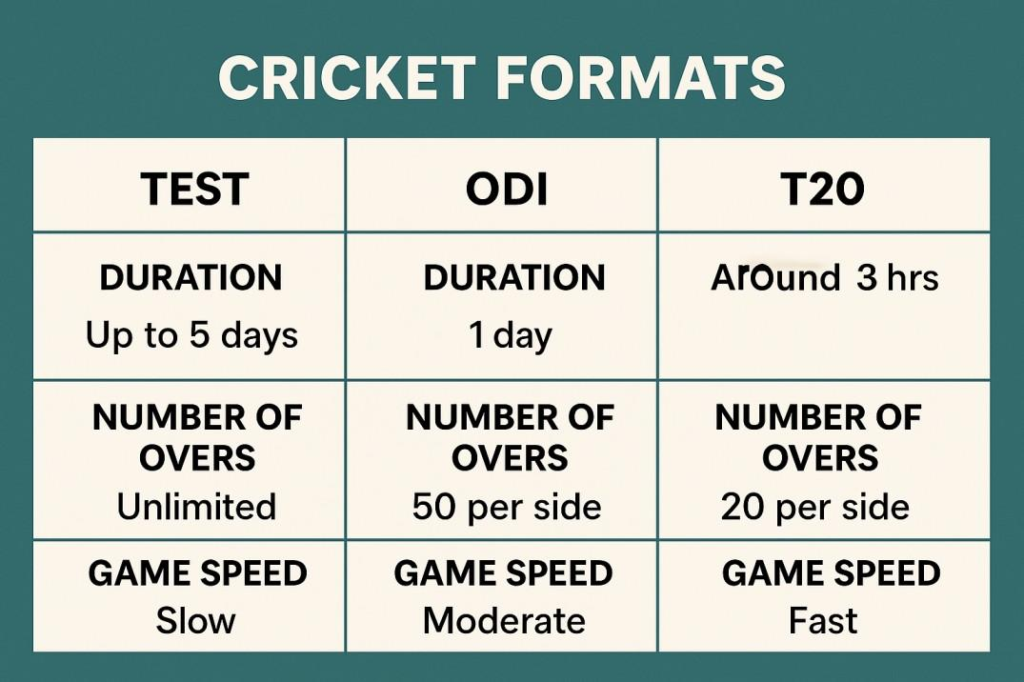
ODI vs T20 Popularity Comparison (2026)
| Metric | T20 Cricket | ODI Cricket |
|---|---|---|
| Match Duration | ~3 hours | ~7–8 hours |
| Engagement Pattern | Consistent | Peaks late innings |
| League Ecosystem | Strong (IPL, BBL, PSL) | Limited |
| Content Format | Mobile-friendly | Long-form viewing |
| Growth Trend | Rapid | Slower |
ODI vs T20: Which Format Performs Better? (Data Comparison)
Rather than a subjective comparison, the difference between ODI and T20 formats is best understood through measurable performance indicators.
- Match Duration & Retention:
T20 matches (~3 hours) maintain higher viewer completion rates, while ODI matches (~7–8 hours) often see drop-offs during middle overs. - Engagement Consistency:
T20 leagues deliver steady, year-round engagement. In contrast, ODI viewership peaks mainly during ICC tournaments. - Revenue Model:
Franchise-based T20 leagues generate recurring annual revenue, whereas ODI revenue is largely event-driven. - Digital Consumption:
T20 formats drive significantly higher streaming and short-form content engagement compared to ODI matches.
👉 Conclusion: T20 performs better in consistent engagement, digital reach, and revenue, while ODI remains stronger during high-stakes global tournaments.
Verified Viewership & Revenue Data (2023–2026)
The 2023 ICC Cricket World Cup generated over 1 trillion viewing minutes globally, according to official tournament data from the International Cricket Council (2023 Cricket World Cup official report), highlighting the massive scale of ODI events during peak tournaments.
The 2026 ICC T20 World Cup crossed 500+ million viewers, representing an estimated 2–3x higher engagement compared to most bilateral ODI series, based on broadcast analytics from Star Sports and JioCinema.
In addition, a semi-final match reached 65.2 million concurrent digital viewers, significantly higher than typical ODI streaming peaks, highlighting the shift toward digital-first consumption.
By comparison, bilateral ODI series generally attract 50–120 million viewers, depending on teams and match context, reinforcing the gap in consistent engagement.
The tournament also recorded 10+ billion social video views, further proving the dominance of short-format content across digital platforms.
👉 Overall,T20 maintains steady engagement throughout the year , while ODI delivers peak global viewership during major ICC tournaments.
Data Sources
- International Cricket Council – Official tournament reports (2023–2026)
- Board of Control for Cricket in India – Media rights and IPL viewership data
- Star Sports & JioCinema – Broadcast and streaming analytics
Which Format Is Growing Faster?
T20 growth is accelerating due to:
- Expansion of global franchise leagues
- Mobile-first content consumption
- Higher engagement per minute
ODI growth remains stable but is increasingly tied to ICC tournaments.
As a result, T20 continues to expand faster across both traditional and emerging cricket markets.
T20 vs ODI Revenue Comparison (2026)
- T20 leagues generate higher yearly revenue through franchise systems
- More matches = more ad revenue and sponsorship deals
- ODI revenue spikes mainly during ICC tournaments
- Media rights for T20 leagues are significantly higher per match
Why T20 Is More Popular in 2026
1. Time Efficiency
A full result in ~3 hours fits modern viewing behavior.
2. League Ecosystem
The Indian Premier League drives continuous fan engagement through a fixed yearly calendar.
3. Engagement Density
- Higher scoring rates
- Frequent match-turning moments
- Strong highlight value
On the other hand, ODI cricket still offers strategic depth and long-form storytelling.
Moreover, franchise leagues play a crucial role in maintaining year-round engagement.
Why ODI Cricket Still Matters
1. Global Tournament Impact
The ICC Cricket World Cup remains one of the most-watched sporting events worldwide.
2. Tactical Depth
ODIs offer a balance between aggression and strategy across innings phases.
3. Legacy Value
Records built by players like Sachin Tendulkar still define greatness in cricket.
However, ODI cricket still holds unmatched importance during global tournaments.
Why Cricket Boards Prioritize T20
The shift toward T20 is driven by economics:
- Recurring annual league revenue
- More matches = more advertising slots
- Higher sponsor ROI
- Easier global scalability
👉 T20 is the financial engine of modern cricket
Popularity Trend (2010–2026)
- 2010–2014 → ODI dominant
- 2015–2019 → T20 expansion phase
- 2020–2026 → T20 becomes primary format
Digital streaming accelerated this transition significantly.
Fan Base Split (2026 Estimate)
- T20 audience share: ~65–70%
- ODI audience share: ~30–35%
👉 T20 accounts for the majority of everyday viewing, ODI remains event-driven.
- India: T20 viewership share is higher (~70–75%) due to IPL-driven engagement
- Global: ODI retains stronger presence during ICC events (~40%+ share in World Cup years)
- TV vs Digital Split (2026):
- T20 → ~60–70% digital consumption (mobile + streaming)
- ODI → ~55–65% TV viewership (especially during tournaments)
T20 vs ODI Audience Share (2026 Estimate)
- T20: ████████████████ 70%
- ODI: ████████ 30%
👉 This clearly shows T20 dominance in global viewership trends.
India vs Global Perspective
India
- T20 dominates due to IPL ecosystem
- Younger audience prefers shorter formats
- Evening matches align with peak engagement
Global
- Balanced format usage in England & Australia
- Associate nations prefer T20
- ICC expansion strategy focuses on T20
Similarly, global audiences are adapting to shorter formats due to changing viewing habits.
Why ODI Is Losing Popularity
- Long match duration (7–8 hours)
- Reduced interest in bilateral ODI series
- Rise of T20 leagues globally
- Changing viewer behavior toward shorter formats
Is ODI Cricket Dying?
No—but its role is changing:
- Becoming tournament-focused
- Reduced bilateral importance
- More selective scheduling
As a result, ODI cricket is increasingly limited to ICC tournaments rather than regular bilateral relevance, reflecting a structural shift in how the format is consumed globally.
ODI vs T20: Final Data Verdict
- T20 leads in daily engagement and revenue
- Meanwhile, ODI dominates global tournament viewership
- Overall, growth trends strongly favor T20
ODI vs T20 – Quick Summary
- In terms of engagement, T20 drives the majority of daily viewership and revenue
- On the other hand, ODI excels during global tournaments
- As a result, overall growth trends continue to shift toward T20
FAQ
Which format is more popular in 2026?
T20 is more popular globally due to higher engagement.
Why is T20 growing faster?
Shorter format, better monetization, and digital compatibility.
Is ODI cricket declining?
It is becoming more focused on ICC events.
Which format earns more revenue?
T20 generates more revenue through leagues.
Future of ODI vs T20 Cricket (2026–2030)
- T20 will continue dominating global cricket markets
- ODI may become limited mainly to ICC tournaments
- Franchise cricket will expand internationally
- Hybrid or shorter formats may emerge
What This Means for Fans and the Future of Cricket
The shift toward T20 dominance is not just about popularity—it is fundamentally changing how cricket is consumed, played, and monetized.
For fans, this means shorter attention cycles, faster-paced matches, and increased reliance on digital platforms such as mobile streaming and highlight-based viewing. As a result, younger audiences are more likely to engage with cricket through T20 leagues rather than traditional formats.
For players, the rise of T20 creates more financial opportunities through franchise leagues, while simultaneously reducing the importance of bilateral ODI series. Consequently, player career paths are increasingly shaped by league performance rather than long-format consistency.
From a broader ecosystem perspective, cricket boards are prioritizing formats that generate consistent revenue. Therefore, T20 is becoming the commercial backbone of the sport, while ODI is evolving into a premium, event-based format focused mainly on ICC tournaments.
Ultimately, this transition reflects a deeper shift in global sports consumption—where entertainment value, digital accessibility, and frequency of engagement define long-term popularity.
Conclusion
The ODI vs T20 popularity 2026 debate now has a clear answer.
Overall, T20 has become the primary format driving viewership, revenue, and growth in modern cricket
- Viewership
- Revenue
- Growth
ODI remains important for:
- Global tournaments
- Historical significance
- Strategic depth
Final takeaway:
T20 drives the present and future
ODI preserves the legacy
Author
Aman Sharma
Cricket Analyst
Aman Sharma is a cricket analyst specializing in IPL trends, global cricket viewership, and format comparisons. With over 5 years of experience covering ICC tournaments and franchise leagues, he focuses on data-driven insights into cricket popularity and fan engagement.